

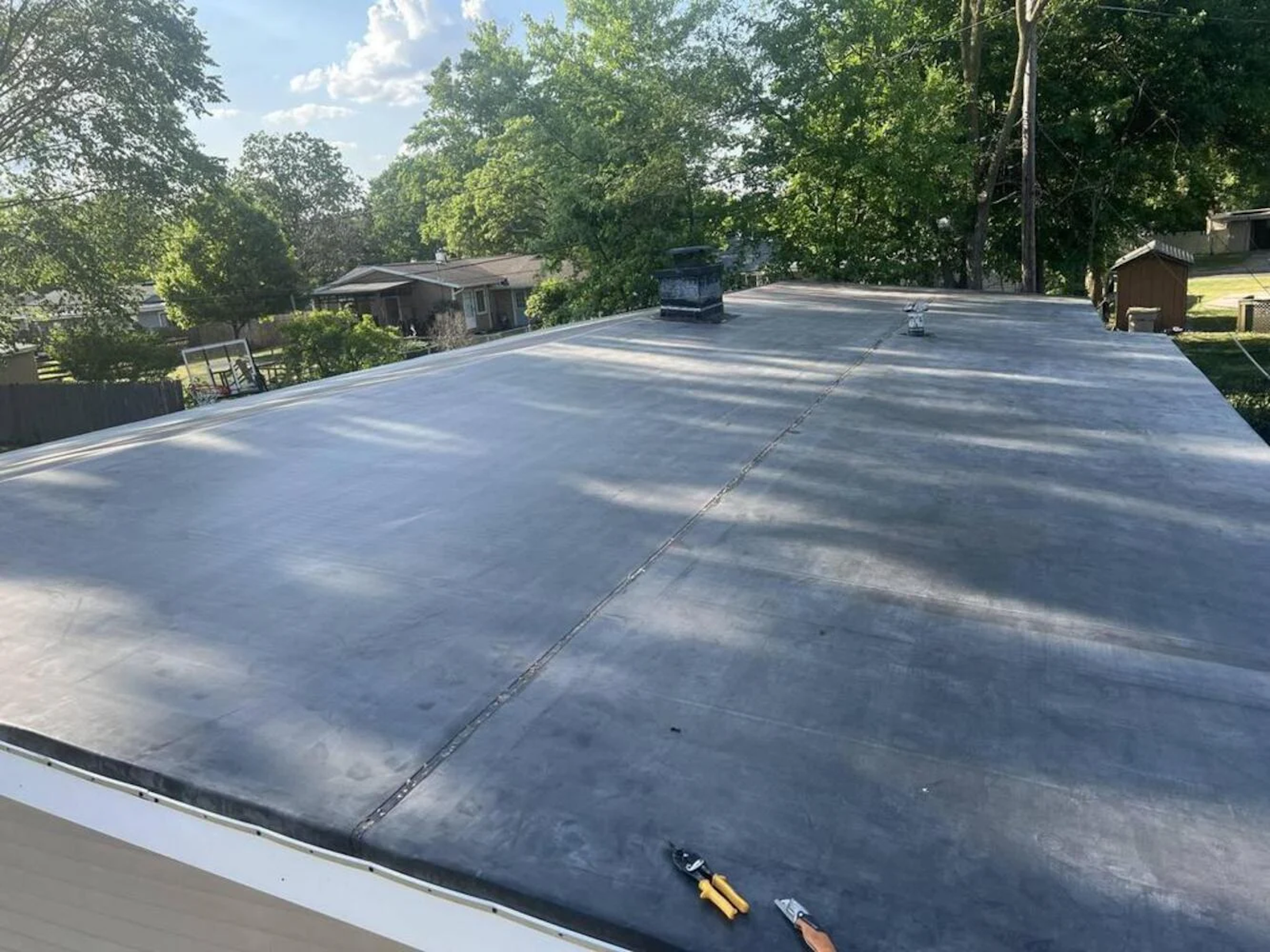
What Is EPDM Roofing? 8 Benefits For Flat Roofs
If you’re exploring options for a commercial or residential low‑slope roof, what is EPDM roofing and why it’s widely used for flat roofs matters a lot. EPDM roofing is a synthetic rubber membrane that offers durability, weather resistance, and cost‑effective performance for flat and low‑slope roofs. Whether you’re maintaining an older building or planning a new installation in Indianapolis, IN, understanding EPDM’s benefits helps ensure the best choice for your property.
Here are a few key points to keep in mind as you read:
- EPDM stands for ethylene propylene diene monomer, a type of rubber.
- It’s especially popular for commercial and flat residential roofs.
- Costs tend to be lower compared to other membrane systems.
- With proper installation, EPDM can last for decades.
We’re proud to serve home and business owners in Indianapolis, IN, and nearby communities with EPDM roofing installations, maintenance, and more.
What Is EPDM Roofing?
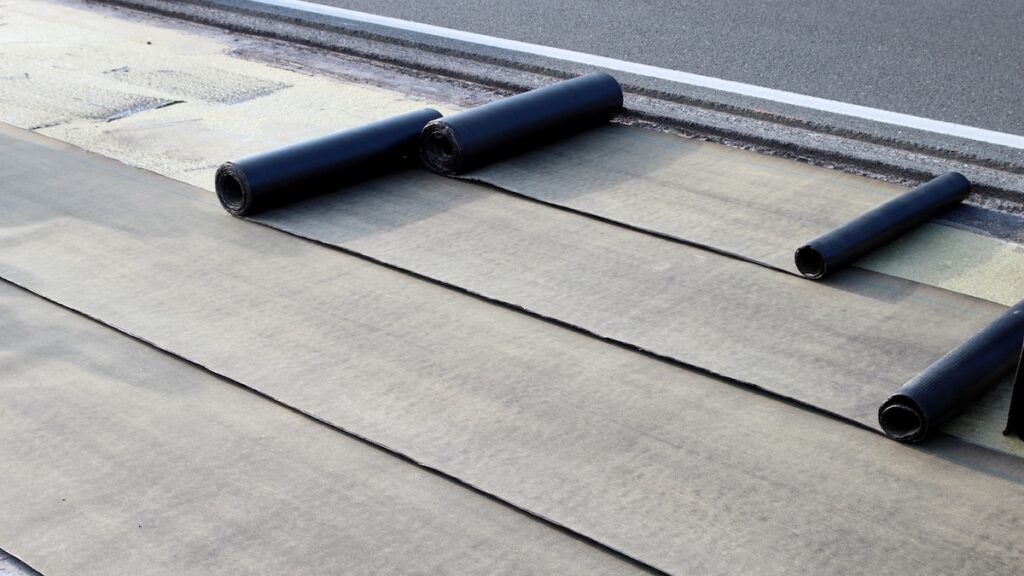
EPDM roofing is a single‑ply membrane composed primarily of synthetic rubber. It was developed in the 1960s and has since become a go‑to material for flat and low‑slope roofs across North America. Unlike steep asphalt shingle roofs, flat roofs require a continuous membrane system that resists water penetration and stands up to expansion and contraction as temperatures change.
The EPDM membrane comes in large sheets that can be adhered, mechanically fastened, or ballasted over the roof deck. Its black surface absorbs heat, which can be advantageous in cooler climates and when paired with insulation. Because of its flexibility, EPDM handles temperature swings without cracking or becoming brittle, making it especially suited to areas that experience seasonal variance.
How EPDM Is Installed
An EPDM roofing system must be installed by experienced professionals because proper seams and adhesion are critical to performance. The process typically includes:
- Roof deck preparation: Ensuring a clean, smooth surface free of debris.
- Membrane placement: Rolling out large EPDM sheets over the surface.
- Attachment method: Securing with adhesive, plates, or ballast depending on the system.
- Seaming: Seams are carefully sealed with tapes or adhesives to prevent leaks.
- Flashing and edges: Specialized detailing around penetrations and edges to maintain watertight integrity.
Correct installation reduces the risk of future leaks and helps the membrane perform as designed for decades.
EPDM vs. Other Flat Roof Materials
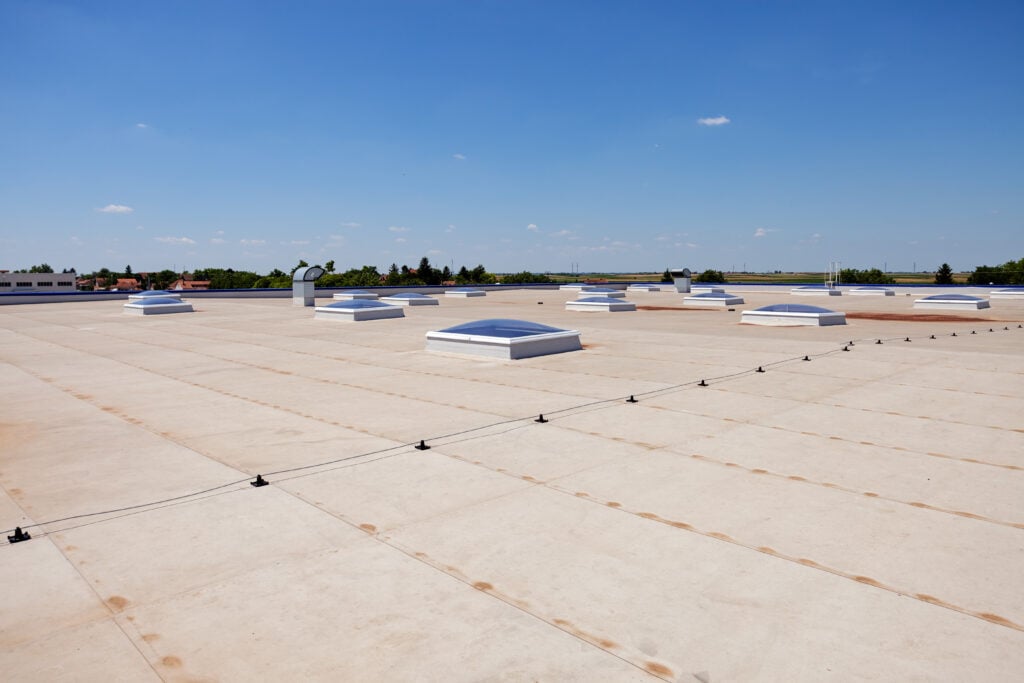
While TPO and PVC reflect more sunlight due to lighter colors, EPDM’s low cost and proven track record keep it competitive, especially where long‑term thermal performance and budget are priorities. Below is a simplified comparison of EPDM with two other popular flat roofing materials:
| Material | Typical Lifespan | Installation Cost | Weather Resistance | Notes |
| EPDM | 20–30+ years | Lower | Good | Cost‑effective and flexible |
| TPO (Thermoplastic) | 15–25+ years | Moderate | Very good | White finish reflects heat |
| PVC (Polyvinyl) | 20–30+ years | Higher | Excellent | Strong chemical resistance |
EPDM rubber roof systems remain a staple in both residential and commercial roofing systems because of their affordability, versatility, and performance.
8 Benefits of EPDM Roofing for Flat Roofs
Here are eight major advantages that make EPDM roofing a top pick for flat and low‑slope roofs.
1. Cost‑Effective Initial Investment
EPDM roofing generally costs less per square foot than many other membrane systems. The material itself is affordable, and installation tends to be less labor‑intensive, which reduces upfront costs for building owners.
- Budget friendly: Lower material and labor costs.
- Good for commercial budgets: Especially large roof areas.
- Predictable pricing: Less variability than some premium systems.
- Value for money: Long service life reduces frequent replacement needs.
2. Longevity and Durability
EPDM is known for standing up to decades of weather exposure. Its resistance to UV radiation and temperature extremes helps preserve membrane integrity over time without frequent repair.
- Seasonal flexibility: Expands and contracts without damage.
- Resists weathering: Holds up against rain, snow, and sun.
- Durable seams: Professional seaming methods reduce leaks.
- Proven track record: Widely used in many climates.
3. Flexibility in Temperature Extremes
One of EPDM’s strengths is its elasticity. It remains flexible in cold conditions and doesn’t become brittle, while still withstanding heat without deforming.
- Cold‑weather performance: Minimizes cracking.
- Heat tolerance: Resists blistering or buckling.
- Thermal shock handling: Adapts to rapid temperature swings.
- Seasonal reliability: Ideal for regions with wide temperature ranges.
4. Resistance to Ponding Water
Flat roofs can develop areas where water pools after rain. EPDM’s seamless design and water‑resistant properties reduce the risk of leaks from standing water.
- Watertight membrane: Helps prevent water infiltration.
- Low‑slope capability: Performs well even without steep drainage.
- Reduced leak risk: Fewer seams mean fewer potential failure points.
- Suitable for storms: Helps in heavy rain conditions.
5. Ease of Repair and Maintenance
EPDM is straightforward to maintain. If damage occurs, repairs are often simple and inexpensive compared to other systems.
- Patchable surface: Small tears or holes can be repaired.
- Rare maintenance needs: No frequent sealant reapplication.
- Visual inspections: Easy to assess condition.
- Repair cost savings: Fixes typically cost less than other membranes.
6. Compatibility With Insulation Systems
EPDM works well with a range of insulation types. This compatibility helps improve a building’s energy efficiency when combined with proper insulation below the membrane.
- Energy performance: Better heat control with insulation.
- Versatile integration: Works with board and loose insulation.
- Retrofit potential: Can be added over existing layers in some cases.
- Thermal stability: Helps moderate indoor temperatures.
7. Weather and Chemical Resistance
EPDM resists many environmental stresses, such as ozone, UV, and chemical contact. This makes it useful in urban or industrial environments where exposure can be more aggressive.
- UV stability: Holds up under prolonged sun exposure.
- Ozone resistance: Less breakdown from oxygen exposure.
- Chemical resilience: Withstands many pollutants.
- Long‑term performance: Maintains integrity under varied conditions.
8. Proven Performance History
EPDM has been used for decades on commercial buildings and flat residential roofs, making its performance predictable and well understood by roofing professionals.
- Industry familiarity: Roofing experts know how to work with it.
- Track record: Many installations still performing after 30+ years.
- Standardized products: Wide availability from trusted manufacturers.
- Roofing confidence: Contractors see fewer unknowns with EPDM.
How to Care for Your EPDM Roof
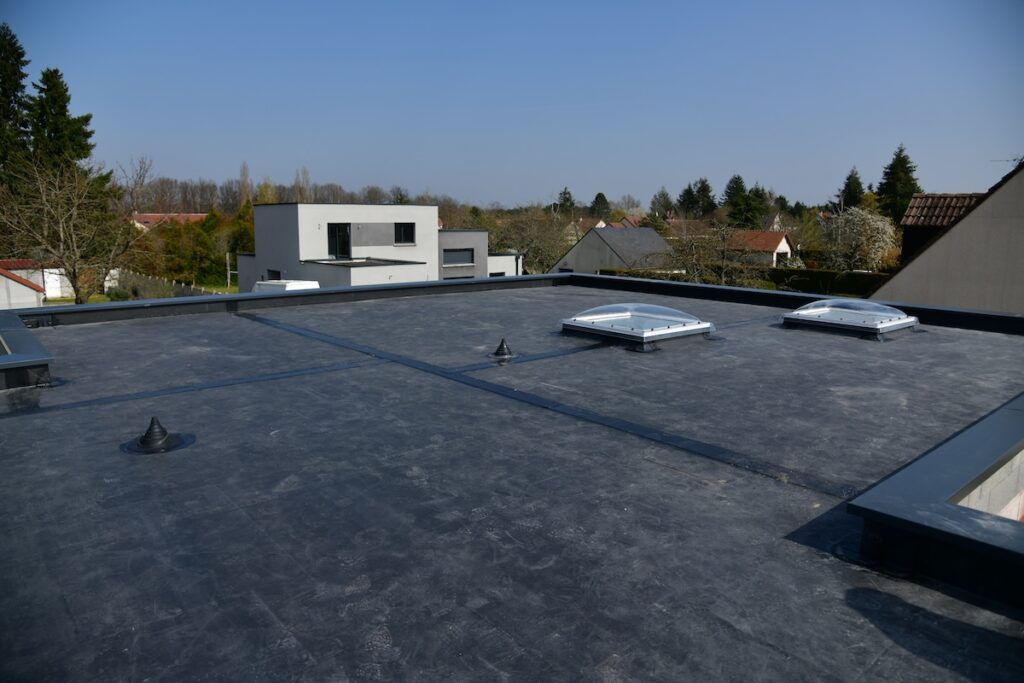
Regular inspections and basic maintenance help EPDM roofing reach its full service life. Key steps include:
- Annual inspections: Look for debris, damage, or ponding water.
- Clean drainage: Ensure drains and scuppers are clear.
- Trim nearby trees: Reduces falling debris and abrasion to the membrane.
- Prompt repairs: Address small issues before they become larger problems.
Simple, proactive care goes a long way toward ensuring long life and performance.
Why Homeowners in Indianapolis Trust One Way Roofing
At One Way Roofing, we work with you to determine if an EPDM roofing system is the best fit for your property. Whether you’re upgrading commercial roofing systems, planning a new roof replacement, or maintaining an existing membrane, our team delivers expert installation and long-term support.
If you’re considering an EPDM rubber roof for your home or commercial building, contact One Way Roofing today to schedule a free consultation and quote. We’ll help you make a smart, lasting investment in your flat roof.
