

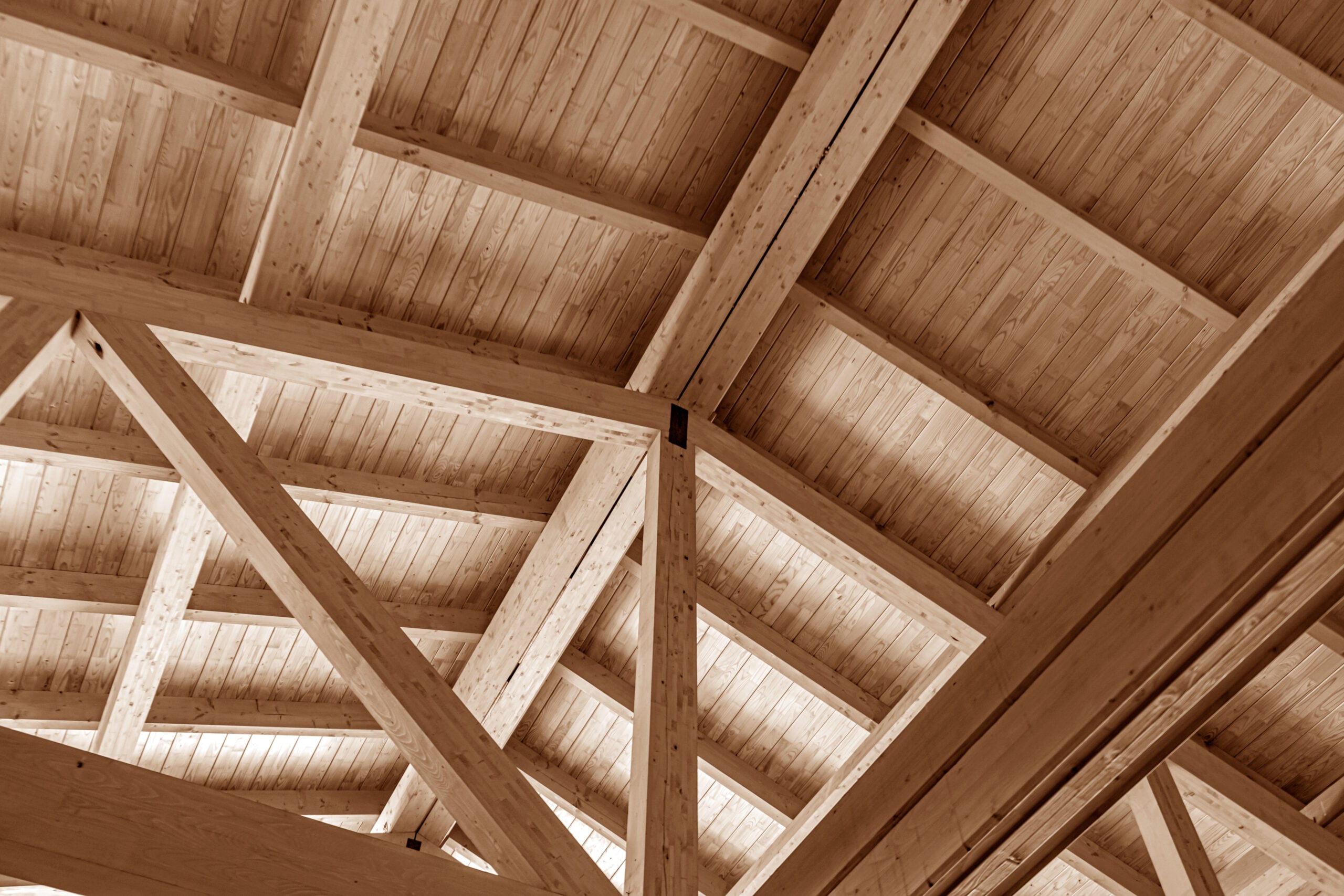
Roof Rafters Vs Trusses For Attics: 4 Design Options
When it comes to the structural framework holding your roof up, most homeowners have never thought twice about what is actually up there. But whether your home uses roof rafters vs trusses has a direct impact on how your attic can be used, how your home performs in Northern Indiana winters, and what your options are if you ever want to finish, expand, or simply access that space above the ceiling. Here is what this post covers:
- What rafters and trusses are and how they differ
- The pros and cons of each system
- 4 attic design options and which framing supports them
- A side-by-side comparison of both systems
- FAQs homeowners ask most
If you are dealing with a roof replacement and want to understand how your existing framing affects your options, our roofing team in South Bend can walk you through what is up there during a free inspection.
What Are Roof Rafters?

Traditional rafters are individual sloped wooden beams, typically 2x8s or 2x10s, that run from the ridge board at the roof’s peak down to the wall plate at the top of the exterior walls. They sit directly beneath the roof deck and provide the primary roof structure that supports all decking, underlayment, and shingles above. Installing rafters is done on-site by a carpenter, with every beam custom cut to match the specific roof design and pitch dimensions.
Traditional rafters were the standard roof framing method in residential construction before the 1960s. If your South Bend home was built before that era, there is a good chance it has a rafter roof. The open space between rafters is what gives older homes their accessible attic areas, finished loft spaces, and vaulted ceilings. That usable space is the single biggest advantage traditional rafters have over trusses.
What Are Roof Trusses?
Roof trusses are engineered trusses prefabricated off-site and delivered to the job site ready to install. They are built using a web of smaller dimensional lumber pieces connected by metal plates, which distributes the roof load across a wide span without requiring interior load-bearing walls, preserving the structural integrity of the building while keeping the wall plate and foundation load predictable. According to the National Association of Home Builders, about 3 out of 4 residential home builders today report using prefabricated roof trusses, largely because they are faster to install and more cost-effective on standard builds.
Engineered trusses became the dominant roof framing method in new residential construction starting in the 1960s and now appear on the majority of homes built in Northern Indiana. The trade-off is the web of interior bracing members that fills the attic space, limiting how that area can be used compared to a traditional rafter roof design.
Rafters vs Trusses: Key Differences
Before getting into specific attic design options, it helps to understand how the two systems compare across the factors that matter most to homeowners.
- Construction method: Traditional rafters are cut and built on-site by a carpenter. Engineered trusses are prefabricated in a factory and delivered ready to install.
- Attic space: Rafters leave the attic open and accessible. Trusses fill the attic cavity with a structural web that limits usable space.
- Cost: Engineered trusses are typically less expensive overall due to reduced labor and faster installation. Installing rafters requires more skilled on-site labor and takes longer to frame.
- Strength and span: Engineered trusses can span up to 80 feet without interior load-bearing walls. Traditional rafters typically cap at 12 to 24 feet depending on lumber grade and spacing.
- Design flexibility: Traditional rafters support custom roof designs, vaulted ceilings, dormers, and attic conversions. Trusses are more standardized and harder to modify after installation.
- Lead time: Engineered trusses require factory fabrication and delivery scheduling. Installing rafters can begin quickly on-site, which can be an advantage on tight timelines.
4 Attic Design Options and Which Framing Supports Them
The framing system in your roof determines which of these four attic design options is realistic for your home. Here is how each one plays out depending on whether you have rafters or trusses.
1. Traditional Storage Attic
A traditional storage attic is the most common use of attic space and the most forgiving in terms of framing requirements. Both rafter and truss roofs can support basic attic storage, though the experience is very different between the two.
With a rafter roof, the attic is a fully open space with clear headroom from wall to wall. Storage is straightforward and accessible. With a standard truss roof, the web of interior bracing members creates a maze of triangular compartments. Storage is still possible in the lower areas near the floor, but moving items in and out requires working around the structural web, and headroom is typically limited to the center of the attic.
- Best framing for this option: Either system works, but rafter roofs offer significantly more usable floor area and easier access.
- Truss consideration: Attic trusses, a specialized truss design with a raised heel and open center section, can be specified during new construction to preserve a usable storage zone while maintaining the structural advantages of a truss system.
- Important note: Never modify or cut truss members to create more space. Trusses are engineered as a complete system and removing any member compromises the entire structure.
2. Finished Attic or Bonus Room

Converting an attic into a finished living space, whether a bedroom, home office, or bonus room, is one of the most valuable home improvement projects a Northern Indiana homeowner can undertake. This option is significantly easier to achieve with a rafter roof than a truss roof.
Rafter roofs provide the open floor area and headroom needed for a finished attic without structural modification. The space is already there. Truss roofs, by contrast, require either a complete engineering redesign to replace the standard trusses with raised heel or room-in-attic trusses, or a costly structural conversion that typically involves temporary roof shoring and full replacement of the framing system.
- Best framing for this option: Rafter roofs are the clear choice. If you are building new and know you want a finished attic, specify rafters or attic trusses from the start.
- Truss conversion cost: Converting a standard truss attic to finished living space is one of the most expensive renovation projects a homeowner can take on. It is almost always more cost-effective to plan for it at the design stage.
- Headroom requirement: Most building codes require a minimum of 7 feet of headroom over at least 50% of the finished floor area for a space to qualify as habitable. Check local requirements before planning a conversion.
3. Vaulted or Cathedral Ceiling
A vaulted or cathedral ceiling, where the ceiling plane follows the slope of the roof rather than running flat across the top of the walls, is only achievable with a rafter framing system. This design option is essentially impossible with standard trusses.
The open, airy feel of a vaulted ceiling comes directly from the clear space that traditional rafters provide between the roof’s peak and the walls. Engineered trusses fill that space with structural webbing. Some specialty truss profiles can approximate a limited vault effect, but they cannot replicate the full height and visual openness of a true rafter roof design. Homes throughout South Bend with older construction and vaulted ceilings almost universally have traditional rafter roofs.
- Best framing for this option: Rafters only. Standard trusses cannot support this design.
- Insulation consideration: Vaulted ceiling spaces are harder to insulate adequately because there is no attic buffer above them. Proper ventilation channels between the rafters are critical in Northern Indiana’s freeze-thaw climate to prevent ice dams and moisture buildup, particularly on steeper roof slopes where snow load and thermal cycling are most pronounced.
- Structural requirement: Vaulted rafter roofs require collar ties or a structural ridge beam to protect the structural integrity of the roof structure and prevent the walls from spreading under roof load. This is a design detail that needs to be addressed at the planning stage.
4. Attic Conversion with Dormers
Adding dormers to an existing attic to create more usable headroom and bring in natural light is a popular renovation option on older Northern Indiana homes. This option is most compatible with rafter-framed roofs and significantly more complex with truss roofs.
Rafter roof framing can be modified by a structural engineer and skilled carpenter to accommodate dormers without compromising the overall roof support. Individual traditional rafters can be redirected or reinforced, and the open attic space makes it relatively straightforward to build out the dormer framing. Engineered trusses, by contrast, require engineering review for any modification, and adding a dormer often means replacing a section of the truss system entirely rather than modifying existing members.
- Best framing for this option: Rafter roofs, which allow targeted structural modifications without full framing replacement.
- Engineering requirement: Any dormer addition, regardless of framing type, should involve a structural engineer to verify load path and confirm the existing foundation and walls can handle the additional weight.
- Permit note: Dormer additions in South Bend require building permits. Always verify local requirements before starting work.
We’re proud to serve homeowners and business owners in South Bend, Indiana, and nearby communities including Mishawaka, Elkhart, and Goshen with roofing inspections, replacements, and structural assessments.
Rafters vs Trusses: Side-by-Side Comparison
| Factor | Rafters | Trusses |
| Construction method | Cut and built on-site | Prefabricated off-site |
| Attic space | Open, fully accessible | Limited by structural web |
| Finished attic potential | High | Low without redesign |
| Vaulted ceiling support | Yes | No (standard trusses) |
| Dormer compatibility | High | Low, requires engineering |
| Span capability | 12 to 24 feet | Up to 80 feet |
| Installation time | Several days | 1 to 3 days |
| Labor cost | Higher | Lower |
| Material cost | Higher per unit | Lower overall |
| Design flexibility | High | Low after installation |
| Load-bearing walls needed | Sometimes | Rarely |
| Best for | Custom homes, attic conversions | Standard new construction |
Common FAQs About Roof Rafters vs Trusses

Homeowners across Northern Indiana ask these questions most often when dealing with a roof replacement, renovation, or attic project.
Which is stronger, rafters or trusses?
Trusses are generally stronger for spanning long distances and distributing roof loads across exterior walls without interior support. The triangular web design of a truss is inherently rigid and performs well under heavy snow loads, which matters in Northern Indiana winters. Rafters are strong for shorter spans and custom designs but rely more on individual member quality and the skill of the carpenter who installs them.
Can I convert my truss attic into usable living space?
It is possible but expensive. Standard trusses cannot simply be cut or modified to create headroom. The conversion requires engineering review, temporary structural shoring, and replacement of the existing trusses with a system that preserves usable space. If you are considering this, get a structural engineer involved before any other planning. The cost often surprises homeowners who assume it is a straightforward renovation.
How do I know if my home has rafters or trusses?
The easiest way is to look in your attic. If you see long, uninterrupted sloped beams running from the roof’s peak to the walls with open space between them, those are traditional rafters. If you see a triangular web of smaller connected lumber members filling most of the attic space, those are engineered trusses. Homes built before the 1960s almost always have traditional rafters. Homes built after 1980 in Northern Indiana almost always have engineered trusses.
Does my framing type affect a roof replacement?
Not directly. Roof replacement involves the roof deck, underlayment, and shingles above the framing, not the roof structure itself. However, if a roof inspection reveals damaged or deteriorating rafter or truss members beneath the roof deck, those structural integrity issues need to be addressed before or during the replacement. That is one reason a thorough inspection before any re-roofing project is worth doing.
One Way Construction and Roofing: Start with What Is Actually Up There
Whether your home has rafters or trusses matters more than most homeowners realize, especially if you are planning a roof replacement, an attic project, or just trying to understand why your energy bills are higher than they should be in a Northern Indiana winter. The framing system you have shapes what is possible.
At One Way Construction and Roofing, we inspect the full roofing system, not just the shingles. We will tell you what we find up there and give you a straight answer on what it means for your next project. Same-day or next-day, free, no pressure. Contact our team to schedule your free roof inspection today. One Way, the right way.
