

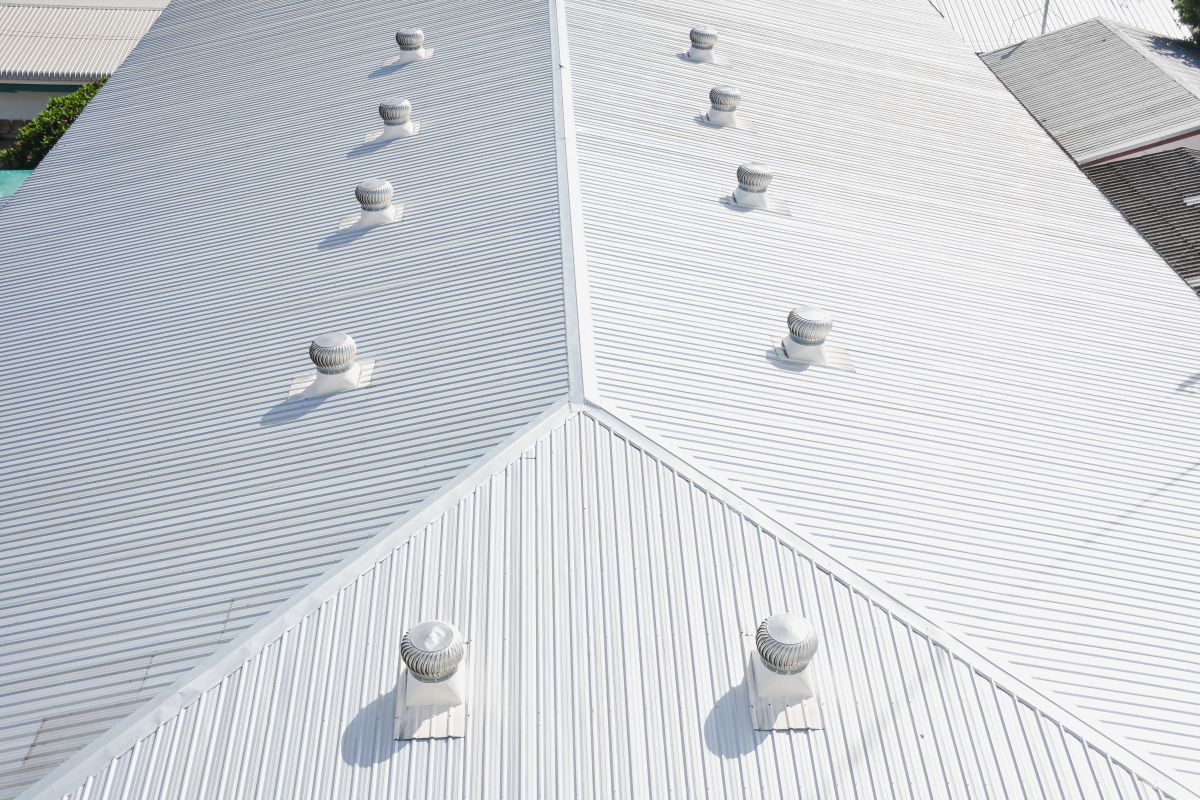
Common Problems With A Low Slope Metal Roof
If you own a commercial property or a home with a flat or nearly flat roof, you already know that a low slope metal roof plays by a different set of rules than a steep slope residential shingle roof. The roof pitch changes everything, from how water drains to which metal panels will hold up over time. Water moves slower, debris collects faster, and the margin for installation error is a lot thinner. Here is what this post covers:
- Why metal is still a strong choice for low slope applications
- The 6 most common problems that show up on low slope metal roofs
- A side-by-side comparison of low slope vs. standard slope metal roofing
- FAQs homeowners and property owners in Northern Indiana ask most

What Makes a Low Slope Metal Roof Different?
A roof is considered low slope when the roof slope rises from 1/4 inch up to less than 3 inches for every 12 inches of horizontal run, with roof pitches ranging from 1/4:12 to 3:12. Anything below that threshold changes how water behaves on the surface, how metal panels need to be fastened, and how much maintenance the system needs over its lifespan.
In the roofing industry, these systems are common on commercial buildings because they are cost-effective and can accommodate rooftop HVAC equipment, which many building owners value.
On a steep slope roof, gravity does most of the drainage work. Rain hits the surface and runs off quickly toward the gutters. On a low slope roof, water lingers. That slower movement puts more stress on every seam, fastener, and flashing point on the entire system, so installation and maintenance must follow specialized water-barrier practices to manage slow drainage of water and snow. A qualified roofing contractor who understands the difference between steep slope and low slope installation requirements is essential to getting this right. Low slope metal systems are typically designed as hydrostatic assemblies that depend on a watertight seal, not just water shedding.
Why Metal Is Still a Strong Choice for Low Slope Roofs
Before we get into the problems, it is worth being clear: metal is not a bad material for low slope applications. The problems that come up are almost always tied to the wrong system choice, poor installation, or deferred maintenance, not the material itself. Here is why metal continues to be a popular option:
- Longevity: A properly installed metal roof can last 30 to 50 years, far outlasting most membrane systems that need replacement every 15 to 20 years.
- Durability in Indiana weather: Metal panels hold up well under freeze-thaw cycles, heavy snow loads, summer hail, and other extreme weather conditions that Northern Indiana sees every year.
- Energy efficiency: Metal reflects solar heat rather than absorbing it, which can help lower energy costs during South Bend summers. According to the EPA’s Energy Star Roof Products Directory, reflective metal roofs can save up to 40% on cooling energy.
- Lightweight profile: Metal is one of the lightest roofing products available, a lightweight roofing system with a light weight profile that places fewer demands on the building’s structural support system, including in earthquake prone areas.
- Minimal maintenance: Compared with other roofing materials, standing seam metal with hidden fasteners is low maintenance because it resists rot, mildew, and insect damage, which means fewer maintenance touchpoints over the life of the roof.
- Clean roof line: Standing seam metal gives low slope roofs a clean, modern look that holds up without the sagging or bubbling you sometimes see with membrane systems.
That said, not all roofing materials perform the same on low slopes. Even so, a low slope metal roof typically outperforms either built up roofing or single ply roofs on longevity and value; the life cycle cost, including maintenance, is expected to be about 30 cents per square foot per year, versus 37 cents for built up roofs and 57 cents for single ply systems. It also compares favorably with other roofing materials such as asphalt shingles, which are a poor fit for low-slope conditions. A typical metal roof also has at least 25% recycled content and is 100% recyclable at the end of its service life.

6 Common Problems With a Low Slope Metal Roof
Low slope metal roofs fail for predictable reasons. Knowing what to look for means you can catch a small issue before it turns into a major repair bill.
1. Ponding Water
Ponding water is the single biggest threat to a low slope metal roof. On roofs with very low pitches, drainage is slower, and poor detailing increases the risk of water lingering after storms. When standing water does not drain or evaporate within 48 hours after a storm, it will start working against your roof almost immediately. Even a small miscalculation in roof pitch during installation can create low spots, but a standing seam design helps move water off the roof, effectively eliminating ponding when the system is detailed correctly.
- Weight stress: A single inch of standing water weighs roughly 5 pounds per square foot, putting real strain on the structure and roof deck underneath.
- Seam damage: Water sitting on metal panels for extended periods accelerates oxidation and degrades sealants at the seams.
- Common causes: Inadequate roof pitch, blocked drains or scuppers, compressed insulation creating low spots, or structural settling over time.
Gutters and downspouts should stay unobstructed so water does not back up onto the shallow roof surface.
2. Fastener Failure and Back-Out
Every screw that penetrates a metal panel face is a potential entry point for water. Over time, the rubber washers under those fasteners compress, crack, or shrink, and that seal is lost. This is one of the strongest arguments for choosing standing seam metal with hidden fasteners on low slope applications. In a mechanically fastened concealed system, panels are secured with clips beneath the raised seam rather than exposed face-fasteners, which helps reduce leak risk on low slope roofs.
Metal also expands and contracts with temperature changes, so concealed, floating clips are needed instead of rigid fasteners to allow that movement without stressing the panels.
- Back-out: Temperature cycling causes metal panels to expand and contract, gradually working screws loose and leaving gaps where water gets in.
- Over-driving and under-driving: Fasteners installed with too much or too little torque both fail prematurely.
- Inspection frequency: Fastener conditions should be checked at least twice a year and after any significant storm, with close attention to attachment points, seam integrity, and flashing around roof penetrations.
3. Thermal Expansion and Contraction
Metal expands when it heats up and contracts when it cools down, and on a low slope roof with long continuous panel spans, that cumulative movement can cause real damage if it was not accounted for during installation. On low slopes, roof panels need room to move because metal roof panels expand and contract across long runs.
According to the National Roofing Contractors Association, metal roof systems can be the least forgiving of all roof systems if provisions for expansion and contraction are neglected, and concealed clips with properly detailed panels are what keep that movement from tearing the system apart; without proper expansion joints, it can result in ruptured flashings or a failed roof system.
- Panel distortion: Panels that cannot move freely will buckle or oil-can, the term for the rippling or waviness that appears as pressure builds along the roof line.
- The Indiana factor: A 100 degree temperature swing between a January night and a July afternoon is not unusual in Northern Indiana, and that range matters for panel movement calculations.
4. Flashing Failures at Penetrations
Every pipe, vent, HVAC unit, or parapet wall that interrupts the plane of a low slope metal roof is a potential leak point. On a low slope or existing flat roof surface, water does not run away from a bad flashing joint the way it would on a steep slope. It sits there, and even a small gap becomes a recurring leak that works its way down to the roof deck.
- Sealant breakdown: Caulk and sealant around penetrations degrades from UV exposure and temperature cycling, and on a low slope roof a failed joint becomes a leak almost immediately.
- HVAC equipment: Commercial low slope roofs with rooftop mechanical units are especially vulnerable because trade contractors cutting penetrations do not always seal them to roofing contractor standards.
5. Seam and Panel Lap Leaks
Low slope metal roofing systems rely on overlapping panel laps, but on low pitches, interlocking panels and standing seam panels outperform simple lapped systems by using butyl tape, sealant, or mechanically locked seams. The roof slope determines how aggressively the overlap needs to be detailed. At a 6:12 pitch on a steep slope roof, a standard lap sheds water before it finds a gap. At a 1:12 pitch, that same lap sits under standing water after every storm.
On low-slope work, the assembly has to move beyond a water-shedding approach and become a fully hydrostatic barrier. A standing seam roof is often the better fit here because it is designed to manage slower drainage and more persistent water exposure.
- Sealant fatigue: UV exposure, thermal movement, and substrate flex all degrade sealants at panel laps over time.
- Wind-driven rain: At low roof slope, wind-driven rain can push water uphill against laps and into seams that would drain away on a steeper pitch.
For that reason, snap lock systems are typically reserved for milder conditions, while mechanically seamed panels deliver a tighter watertight seal on lower pitches. In practice, mechanically seamed standing seam panels can be used down to about 0.5:12; a single lock may be acceptable on some slopes, while double lock and in seam sealant add extra weather tightness where conditions are more demanding.
6. Debris Buildup and Drainage Clogs
A low slope metal roof is essentially a collection surface. Leaves, dirt, and storm debris accumulate around drains, scuppers, and low spots, blocking the drainage the system depends on. This is especially common on existing flat roof surfaces that were not designed with easy maintenance access in mind.
- Organic growth: Debris that stays wet long enough allows moss and algae to establish, holding moisture against metal panels and accelerating corrosion on the roof deck.
- Clogged scuppers and internal drains: A drain that is 50% blocked can turn a moderate rain event into a ponding situation.
We’re proud to serve homeowners and business owners in South Bend, Indiana, and nearby communities like Mishawaka, Elkhart, and Goshen with commercial and residential roofing services and more.

Low Slope vs. Standard Slope Metal Roofing
| Factor | Low Slope (under 3:12) | Standard Slope (3:12 and above) |
| Water drainage | Slow, relies on drains and scuppers | Fast, gravity-fed toward gutters |
| Best panel system | Varies by application: standing seam roofs (SSR), through-fastened roofs (TFR), or insulated metal panel (IMP) roofs | Exposed or concealed fastener viable |
| Ponding risk | High without proper drainage design | Low |
| Thermal movement concern | Higher due to longer panel runs | Moderate |
| Minimal maintenance potential | Higher, since metal resists rot, mildew, and insect damage better than many other roofing materials | Standard |
| Ideal application | Commercial, agricultural, existing flat roof surface | Steep slope residential, steep commercial |
7.2 panel, also called a structural box rib, is a through-fastened option with exposed fasteners that is commonly used for low-slope roofs around 1:12 to 2:12 because its high ribs improve weathertightness and durability.
Common FAQs About Low Slope Metal Roofs
Low slope metal roofing comes up a lot in conversations with Northern Indiana homeowners and commercial property owners. Here are the questions we hear most from people across South Bend, Mishawaka, and Elkhart, with straight answers from our team.
Can standing seam metal be installed on a low slope?
Yes, and it is the preferred choice any experienced roofing contractor will recommend. Standing seam metal with hidden fasteners is specifically engineered to handle the demands of low slope applications, especially when it uses standing seam panels with concealed interlocks rather than exposed-fastener panels. The raised seams keep water well above the panel surface, and concealed fasteners eliminate the most common leak point.
How do I know if my low slope metal roof has a ponding problem?
If water is still sitting in visible pools on your roof 48 hours after a rainstorm, that qualifies as ponding. Other signs include rust staining in circular patterns on the metal panels, soft spots underfoot suggesting roof deck damage below, and water stains on interior ceilings below flat roof areas.
Should I repair or replace my low slope metal roof?
It depends on the age of the system and how far the damage has spread. Localized fastener back-out or a handful of failed seams on an otherwise solid roof is a repair situation. Widespread ponding, extensive corrosion, or moisture damage to the roof deck or existing flat roof surface usually means replacement is the smarter long-term investment. The honest answer requires a real inspection, not a phone estimate.
One Way Construction and Roofing Has Your Low Slope Metal Roof Covered
A low slope metal roof is not something you want to guess at. The problems are predictable, but catching them early and fixing them right takes a roofing contractor who knows the difference between a standing seam metal application and an exposed fastener system, and who will give you a straight answer instead of a sales pitch.
At One Way Construction and Roofing, we handle commercial flat roofing across the South Bend area including EPDM, TPO, roll roofing, and coatings. We will come out same-day or next-day for a free inspection, tell you exactly what we found, and give you a straight answer on whether repair or replacement makes more sense. No upsells, no pressure, no surprises on the invoice.
Call us at (574) 800-9750 or reach out at info@oneway.construction to schedule your free roof inspection. One Way, the right way.
