


Hail Damage Roof Inspection: What to Look For After a Storm?
After a severe hail storm in Fort Wayne, ensuring your roof remains intact is critical to protecting your home. Roof hail damage can occur even when problems are not immediately visible, and hail strikes can weaken roofing materials over time. A timely hail damage roof inspection can help prevent roof leaks, interior water damage, and long-term structural issues. Understanding what to look for after a hail storm allows Fort Wayne homeowners to identify sustained damage early and contact a professional roofing company before minor issues become major repairs.
This guide explains:
- Common signs of hail damage on Fort Wayne roofs
- Why timely hail damage inspections matter
- What homeowners can safely check after a storm
- How professionals inspect for hail damage
- What to do if hail damage is confirmed
Why Conduct a Hail Damage Roof Inspection?
Hailstorms are common in Northeast Indiana and can cause both visible and hidden roof hail damage. Even small hail strikes can compromise shingles, flashing, roof vents, and metal roofing components without causing immediate leaks.
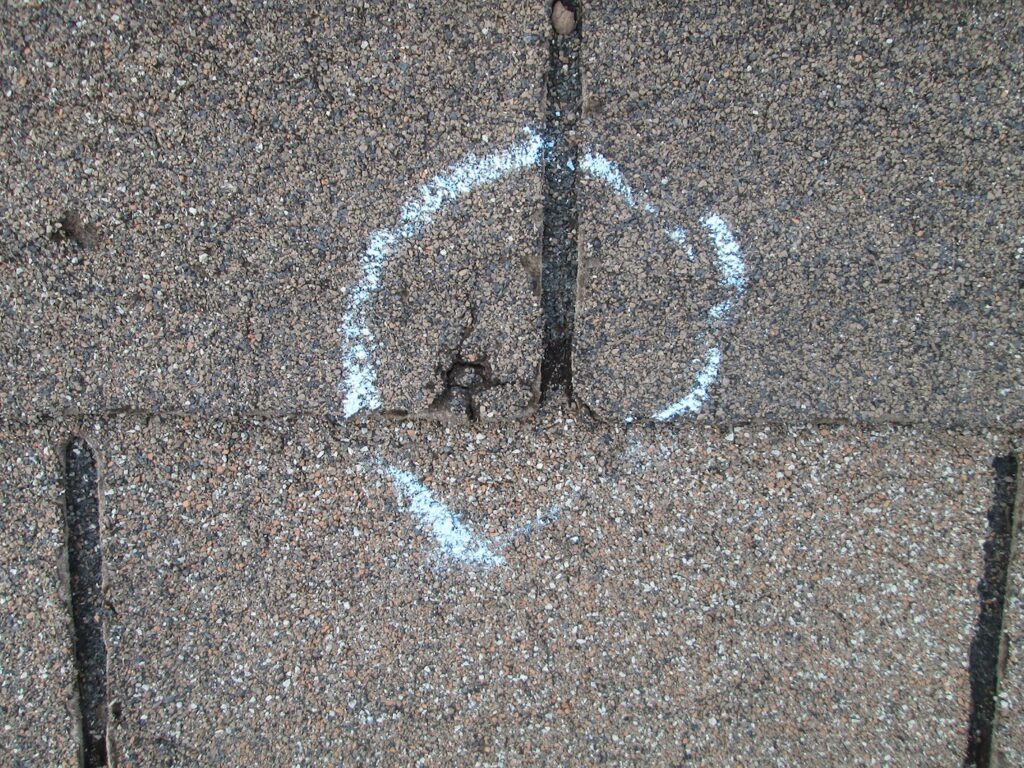
A professional hail damage roof inspection helps Fort Wayne homeowners:
- Protect your investment: Your roof plays a major role in safeguarding your home’s structure and value.
- Prevent water intrusion: Damaged shingles or roof vents can eventually lead to roof leaks.
- Support insurance claims: Prompt documentation helps confirm sustained damage after a hail storm.
- Maintain curb appeal: Hail damage can dent shingles, metal roofing, and exterior components.
- Extend roof lifespan: Early repairs help prevent damage from spreading across the entire roof.
5 Signs to Look For During a Hail Damage Roof Inspection
Not all hail damage is obvious from the ground. Knowing what signs to look for can help Fort Wayne homeowners decide whether the roof should be inspected by a professional roofing company.
1. Dents or Bruises on Shingles
Hail strikes often leave dents or soft spots on asphalt shingles. These bruises indicate damage beneath the surface that can shorten shingle lifespan and increase the risk of roof leaks.
- Location: Check south-facing roof slopes first, as sunlight can make damage more visible.
- Shape and size: Look for round or irregular indentations consistent with hail impact.
2. Granule Loss on Shingles
Granules protect shingles from UV exposure and weathering. During a hail storm, granules can be knocked loose, leaving shingles vulnerable.
- Gutter evidence: Check gutters and downspouts for granule buildup after hail strikes.
- Surface wear: Bald or discolored patches indicate sustained damage to the shingle surface.
3. Cracked or Split Shingles
The force of hail strikes can cause shingles to crack or split, allowing moisture to penetrate the roofing system.
- Edges and seams: Inspect shingle edges where cracks commonly form.
- Hidden damage: Cracks may not be visible from the ground and require the roof inspected up close.
4. Damage to Flashing, Roof Vents, or Metal Roofing

Metal components are especially vulnerable during a hail storm. Dents in flashing, roof vents, or metal roofing panels are common indicators of roof hail damage.
- Metal dents: Look for visible impact marks on flashing, vents, and metal roofing surfaces.
- Seal failure: Damaged sealant around roof vents can allow water intrusion.
5. Damage to Gutters and Exterior Surfaces
Damage to gutters, siding, or fascia often signals the severity of hail strikes on the entire roof.
- Visible dents: Check gutters and downspouts for impact marks or deformation.
- Alignment issues: Loose or misaligned gutters may indicate sustained damage from the storm.
How Professionals Perform a Hail Damage Roof Inspection
While homeowners can perform basic visual checks, a professional roofing company provides a more thorough evaluation of roof hail damage.
Visual Roof Assessment
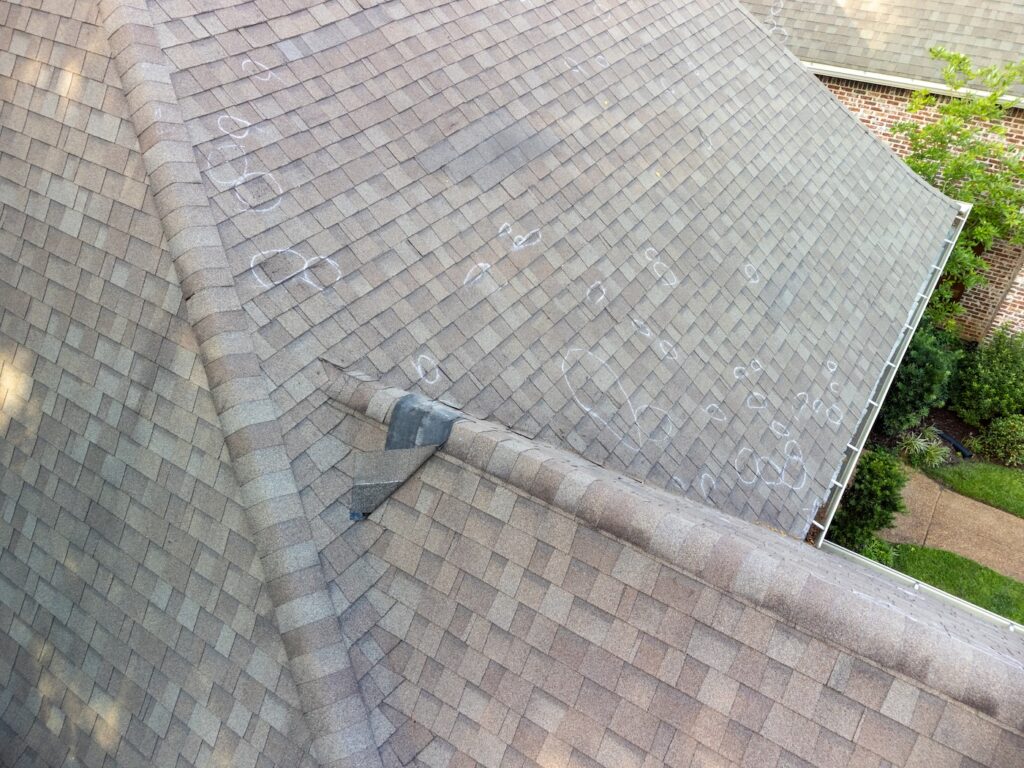
Roofing professionals inspect shingles, flashing, roof vents, and metal roofing components to assess damage across the entire roof.
- Photo documentation: Damage is recorded for insurance and repair planning.
- Close-up inspection: Technicians look for bruising, cracks, and impact points caused by hail strikes.
Advanced Inspection Tools
Some Fort Wayne contractors use specialized tools to detect damage not visible to the naked eye.
- Moisture detection: Identifies trapped moisture that could lead to roof leaks.
- Aerial inspections: Drones may be used to inspect hard-to-reach areas safely.
Structural Evaluation
Inspecting decking, underlayment, and attic spaces ensures the roof structure has not sustained damage beyond the surface materials.
Inspection Report and Recommendations
After the roof is inspected, homeowners receive a detailed report outlining sustained damage and recommended repairs or replacement options.
Common Questions About Hail Damage Roof Inspections
Homeowners often have questions after a hail storm impacts their property.
- When should I schedule an inspection? Ideally within 48 to 72 hours after the hail storm.
- Will insurance cover hail damage? Most policies cover roof hail damage, but documentation is essential.
- Can I inspect my roof myself? Visual checks help, but a professional roofing company identifies hidden damage safely.
- What happens if damage is missed? Undetected sustained damage can lead to roof leaks and interior issues.
- How often should my roof be inspected? At least once per year and after any major hail strikes.
Protect Your Home With a Professional Hail Damage Roof Inspection
Hail damage roof inspections are essential for protecting Fort Wayne homes after a hail storm. Acting quickly helps prevent roof leaks, limits sustained damage, and ensures the entire roof continues to perform as intended.
One Way Roofing is a professional roofing company serving Fort Wayne, Indiana, providing thorough hail damage inspections and repairs for asphalt and metal roofing systems. Contact One Way Roofing today to schedule your roof inspection and protect your home from future storms.
